Decoding the Signals: Insights into this week’s Pakistan-US Dynamics
22 May 2025
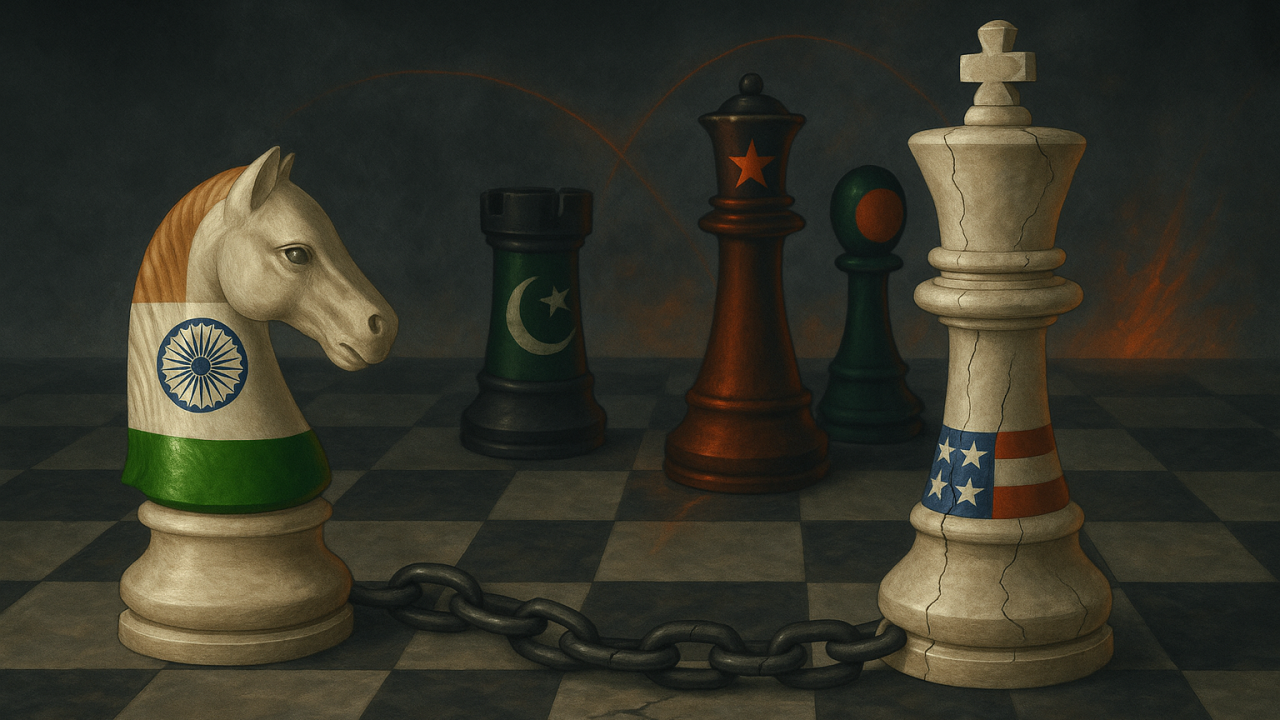
In the aftermath of the Pahalgam massacre, Pakistan’s Defence Minister Khawaja Asif delivered a statement loaded with strategic signaling.
He accused the United States & the United Kingdom of playing a very negative role, charging them with promoting terrorism through Pakistan and hobnobbing with terrorists for three decades.
Through this broadside, Islamabad signaled a sharp pivot: retaliating against American criticism and abandonment by firmly closing the door on the U.S. and instead reinforcing its embrace of the Sino-Pakistan partnership.
Within hours of that salvo, Donald Trump — unwilling to be left without leverage in the Indo-Sino-Pakistani theatre — weighed in.
“India is a very good friend of ours. Pakistan is a very good friend of ours. We hope things will work out between them,” he said.
Trump’s sudden doublespeak revealed a deliberate move to keep channels open with Pakistan, signaling Washington’s reluctance — at least for now — to get drawn into a volatile regional conflict.
It also betrayed a deeper recognition: the strategic balance is shifting. A consolidating Pakistan-China-Bangladesh axis is quietly tilting the geopolitical terrain against India.
Once again, it served as a stark reminder: trusting the U.S. as an enduring security partner is a strategic mistake India can ill afford — and Pakistan’s provocation worked, at least for this round.
That said, Indian government and diplomacy possess tremendous agency and would have anticipated Washington’s ambivalence in this regard well in advance.
Category: POLITICAL
← Back